Sauerkraut Tsukemono
Steps Cook Recipes Sauerkraut Tsukemono using 8 ingredients and 2 steps
Sauerkraut Tsukemono - Japanese Pickles or Tsukemono (漬物) are a delicious way to preserve vegetables. Serve them along with a bowl of rice and miso soup for a traditional Japanese breakfast. This Asazuke (浅漬け) is an easy fresh pickle made with napa cabbage, carrots, scallions, and ginger that's ready to eat in a matter of hours. Delicious and crispy homemade pickled cabbage enjoyed with a traditional Japanese meal, brined in salt, kombu strips, and chili flakes. Tsukemono (漬物, literally translates to "pickled things") are Japanese preserved vegetables that are usually pickled in salt, brine or a bed of rice bran called nuka.
There might be a difference in the kinds of bacteria indigenously inhabiting in the air (or on.
There are many kinds that are pickled in many ways, using salt, vinegar, Miso, rice bran, etc.
You can have Sauerkraut Tsukemono using 8 ingredients and 2 steps. Here is how you achieve that.
Ingredients make Sauerkraut Tsukemono
- It's 50 g sauerkraut.
- Prepare 1 knob fresh ginger, cut into thin stripes.
- You need 50 g cucumber, cut into thin stripes.
- You need 1 Tbsp canned tuna, drained.
- Prepare to taste soy sauce.
- You need 1 drizzle of sesame oil.
- Prepare 1 pinch sesame seeds.
- It's dry calendula petals you find for tea (optional).
Sauerkraut Tsukemono step by step
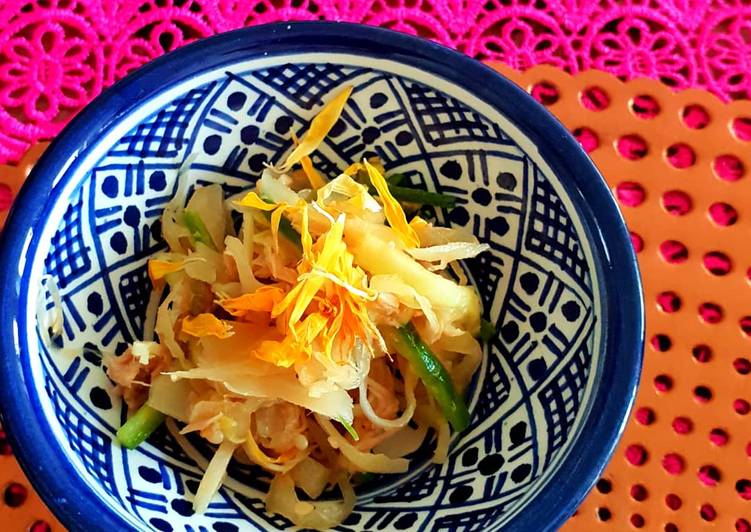
- Combine sauerkraut, ginger, cucumber and tuna in a bowl and season with soy sauce Adjust the amount of soy sauce depending on how much salt in your sauerkraut..
- Drizzle the mixture with sesame oil. Sprinkle sesame seeds and calendula petals to garnish..
Sauerkraut Tsukemono - There might be a difference in the kinds of bacteria indigenously inhabiting in the air (or on the foods) and that may affect the tas. Tsukemono / Hakusai No Shiozuke / Japanese Pickled Cabbage: Tsukemono (say "TSKEH-mohnoh" never "TSOOkeh-mohnoh". just think of the "su" part as being whispered instead of spoken) means "pickled things" and includes a great variety of Japanese pickle, both fruit and vegetable types. Toss in nonreactive bowl or crock with salt. The different methods used to make tsukemono vary from a simple salting or vinegar brining, to more complicated processes involving cultured molds and fermentation. All kinds of vegetables and some fruits are used to make tsukemono including, but not limited to, Japanese radish (daikon), cucumber, eggplant, carrot, cabbage, water lily root. Tsukemono (漬物), or Japanese pickles, are preserved vegetables that are pickled in salt, salt brine, or rice bran. They come in great varieties and forms, and you can often find one or two varieties of tsukemono being served in an Ichiju Sansai 一汁三菜 meal or as an accompaniment to sushi or as a garnish to a yoshoku (Japanese-western. Thank you and good luck